There’s a version of gratitude that shows up right on schedule. Good news arrives, we feel grateful, we might even post about it. A promotion, a parking spot that opens up right in front of the building, a latte with a perfect heart in the foam. We’re all fluent in that kind of thanks.
That version of gratitude has an asterisk on it, though. It only shows up when something’s already gone right. Which means the second something goes wrong, a bad diagnosis, a breakup, a job that ends without warning, it packs up and leaves the building right along with our good mood.
There’s another version of gratitude, though, one most of us were never actually taught. It doesn’t wait for permission. It doesn’t need the story to have a happy ending yet. It’s less of a reaction and more of a way of being in the world, and it works even, maybe especially, when things are genuinely hard.
We’ve gotten pretty good at performing gratitude. The vision board. The gratitude journal with the inspirational cover. The post captioned “feeling so blessed” under a picture of a sunset that, let’s be honest, looks a lot like every other sunset. None of that is wrong. It’s just not always the same thing as actually living inside gratitude as a state of being, especially on the days a sunset is the last thing we feel like posting about.
Gratitude With an Asterisk
Here’s the thing about conditional gratitude. It’s easy, and it’s also kind of a rigged game. If we only feel grateful when circumstances cooperate, we’ve basically outsourced our peace of mind to whatever happens to be occurring that week. Traffic, a text that doesn’t come, a number on a scale. None of it is actually in our control, which means neither is our gratitude.
We’ve all lived this. The year everything was going right and gratitude felt effortless. And then the year it wasn’t, when a gratitude journal sitting on the nightstand started to feel like a small, judgmental object staring back at us. Not because gratitude stopped being true. Because we’d only ever practiced the version that requires good news first.
So the real question worth sitting with is this: are we actually practicing gratitude, or just reacting to good news?
The Version Nobody Warns You About
The psychiatrist Viktor Frankl spent years in concentration camps in the worst conditions imaginable, yet came out with an idea that’s stuck around for good reason. We can’t always choose what happens to us, but we can always choose the meaning we assign to it. Not because meaning erases pain. Because meaning is the only part of the equation we actually get a vote on.
An attitude of gratitude works the same way. It’s not gratitude because of something. It’s gratitude within everything, including the parts we’d never have picked. That’s a genuinely hard idea to wrap our heads around in the middle of real grief or when things are completely falling apart. I’m not trying to rush you or anyone there. It required real practice in our lives. It’s more about knowing the “gratitude in the midst all things” door exists, so that eventually, in our own time, we can walk through it.
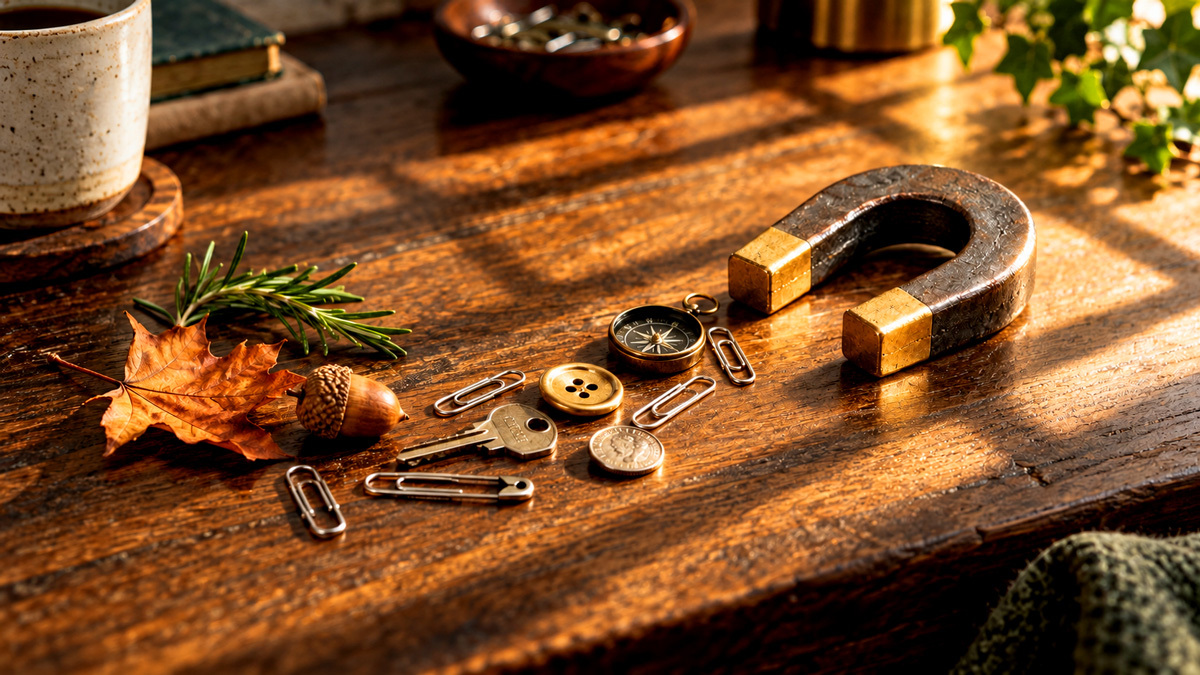
Gratitude, the Magnet
Here’s where it gets practical. Gratitude researchers, people like psychologist Robert Emmons, who’s spent decades studying this, tend to find that people who practice it regularly sleep better, report less stress, and generally describe themselves as more resilient. That’s worth something on its own.
But there’s a second effect that matters even more here. What we’re actively focused on is what we start noticing. Our brains filter an almost unbelievable amount of information every second, and the parts that make it through tend to match whatever we’re already primed to look for. Buy a red car, and suddenly every third car on the road is red. It was always there. We just weren’t looking for it yet.
The internet calls this manifesting. Coaches and therapists tend to just call it “changing our state.”
Gratitude does the same thing to opportunity. A conversation that turns into a client. An idea that only makes sense in hindsight. A coincidence that solves a problem we hadn’t even said out loud yet. None of that is guaranteed. But a nervous system that’s relaxed, open, and actively looking for the good is going to catch far more of it than one that’s braced, defensive, and scanning for the next thing to go wrong.
Making This Practical
This isn’t about forcing a silver lining onto real pain, or performing gratitude while we’re actually devastated. It’s about building the gratitude muscle in the small moments, so that it’s available in the big ones.
Here are a few ways to practice this on purpose:
- Instead of a nightly list of good things, keep a “not yet” list for the hard ones: “I don’t know the gift in this yet, and I’m staying open to it.” No forced silver lining required.
- Notice one ordinary, unremarkable thing a day, hot water, a text back, a green light, and actually let ourselves feel the gratitude instead of just registering the fact.
- When something goes sideways, swap the question. Instead of “Why is this happening to me?” ask, “What is this making room for?”
- Say thank you to the version of ourselves that’s handling something hard right now, not because it’s easy, but because that version of us deserves it too.
- Keep something, a note, a photo, a small object, that reminds us of a tough time in our life that turned out to serve us, so the next rough patch has evidence to stand on.
None of these require the situation to resolve first. That’s the whole point. Gratitude as a way of being doesn’t wait at the finish line to greet us. It walks the whole route with us.
Everything doesn’t happen for a reason we can always name right away, and this isn’t about pretending it does. But everything can be met with the same steady trust, that we’re being prepared for something, taught something, or protected from something we can’t see yet. That trust is available on the hard days too. Maybe especially then.
The magnet was never the good news. It was always us, the state we’re standing in when the good news, or the next opportunity, or the unexpected door, happens to show up. Every step forward, even the ones that don’t make sense yet, is still a step toward something bigger. Not forcing gratitude to arrive on schedule, but choosing to stand in it anyway, and trusting that the next right thing is already on its way, even if we can’t see the shape of it yet.
If any of this has moved something in you, I’d love to talk. I offer a free discovery session where we can look at what’s really going on, what you actually want, and what a small step forward could look like. No pressure, no pitch, no homework. Just an honest conversation about you and where you want to go.
With love,
Jess


